Arlula Knowledge Base
Welcome to the home for Arlula platform documentation is and support resources.
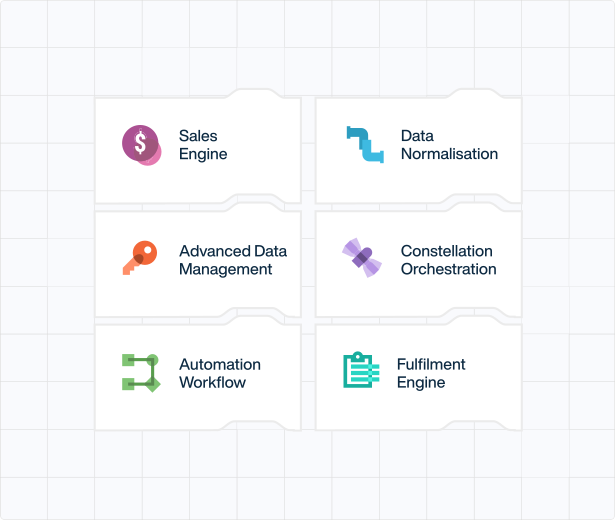
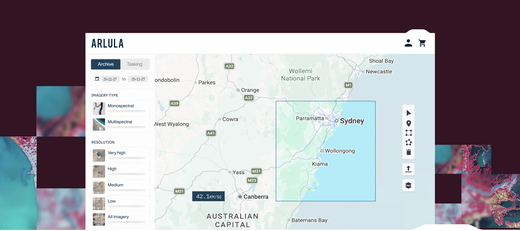
A commercial layer for selling Earth Observation data
Turn fragmented EO sales into a modern, self-service commercial layer without losing control over high-value relationships.
- Let customers discover, price and request imagery through a secure interface
- Automate quoting, billing, feasibility and entitlements without building a custom marketplace
- Scale revenue without scaling manual sales operations
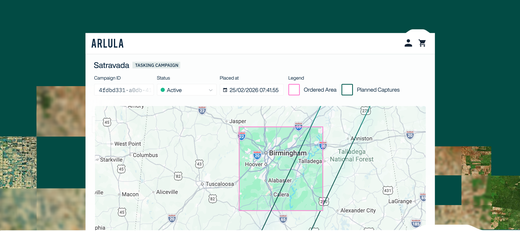
Unified ordering and delivery across providers
Standardise how archive imagery is ordered, satellites are tasked and data is delivered across commercial and national systems.
- Replace swivel-chair workflows with a single, trusted interface
- Deliver imagery directly into secure cloud or on-prem environments
- Deliver reliably, even as volume and urgency increase
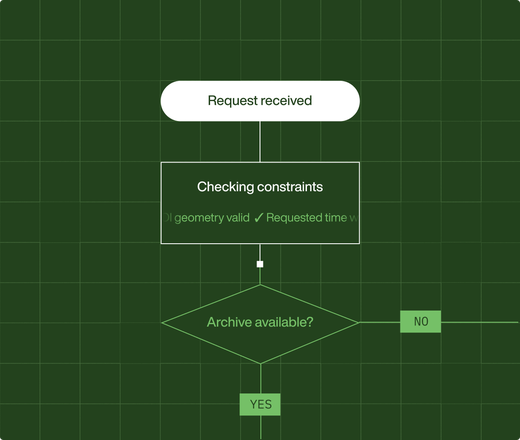
Automate geospatial processing from end to end
Build and run production-grade EO pipelines without brittle scripts or manual handoffs.
- Orchestrate tools, dependencies and execution across systems
- Monitor workflows with full observability and failure recovery
- Move from capture to analysis-ready outputs faster and more reliably
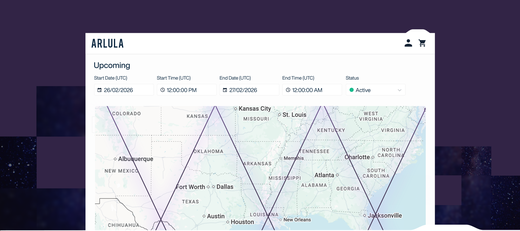
Automated satellite scheduling at any scale
Generate and maintain optimised capture schedules across single satellites or full constellations.
- Evaluate tasking requests against orbital and sensor constraints
- Resolve conflicts and capacity trade-offs automatically
- Increase utilisation without expanding scheduling teams

Secure, enterprise-scale control of spatial data
Govern access, licensing and usage across sensitive EO datasets without creating silos.
- Build a unified internal archive of spatial data assets
- Enforce fine-grained access controls at user and API level
- Maintain full auditability for defence and enterprise compliance
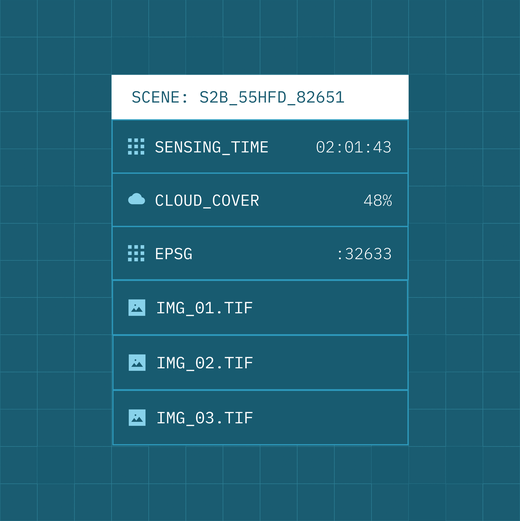
Make EO data interoperable and cloud ready
Standardise imagery and metadata at ingestion so downstream systems work reliably at scale.
- Convert imagery to STAC-based, cloud-optimised formats
- Eliminate inconsistencies across sensors and suppliers
- Ensure data is analysis-ready the moment it arrives